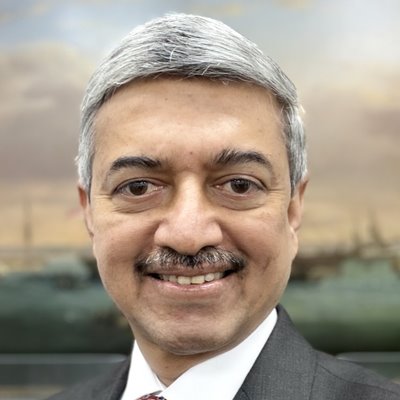
Krishnan Subramaniam
Interational Chairman
About
Krishnan Subramaniam is a distinguished expert in supply chain management, logistics, commercial shipping, and industry education, with nearly four decades of experience. He currently serves as Chief Learning Officer at Transworld Academy of Excellence. He holds industry leadership roles as the International Chairman of the Institute of Chartered Shipbrokers (ICS), U.K and as a key member of the International Chamber of Commerce (ICC) UAE's Steering Committee for the Customs & Trade Facilitation Commission. Throughout his career, Krishnan has held significant positions at Bharat Petroleum Corporation in India, Shell Petroleum in Dubai and Singapore, Aurora Tankers/IMC Group in Singapore, Fusion Group in Dubai and India, and Petrochem Middle East in Dubai. As a Fellow of the Institute of Chartered Shipbrokers (FICS), he is also an active trainer and mentor with the ICS as well as other professional bodies. Krishnan’s contributions extend into academia, where he serves as an Academic Advisor at various maritime institutions and as an adjunct faculty member at S.P. Jain School of Global Management, Dubai, UPES India, IIM Mumbai and Gujarat Maritime University, sharing his deep knowledge of shipping and logistics with the next generation of industry professionals.
Sessions (2)
Sessions featuring Krishnan Subramaniam at Breakbulk Global Shipper Network
The Talent Gap
The session highlights a critical talent gap in the maritime and supply chain industries, driven by rapid growth, digital advancements, and evolving workforce expectations. To address this, the focus is on creating a larger, digitally savvy talent pool through collaboration between institutions and industry, ensuring the next generation is equipped with the necessary skills and domain knowledge.
Fleet Under Pressure: Capacity, Costs, and the Crew Crisis
This panel session explores the pressures reshaping vessel supply, crew costs, and project cargo flows, focusing on the Arabian Gulf, Red Sea, and the impact of political instability and tariff shocks. Panelists discussed challenges in planning due to geopolitical factors and market volatility, emphasizing the need for adaptability and strategic investment in new, sustainable technologies.