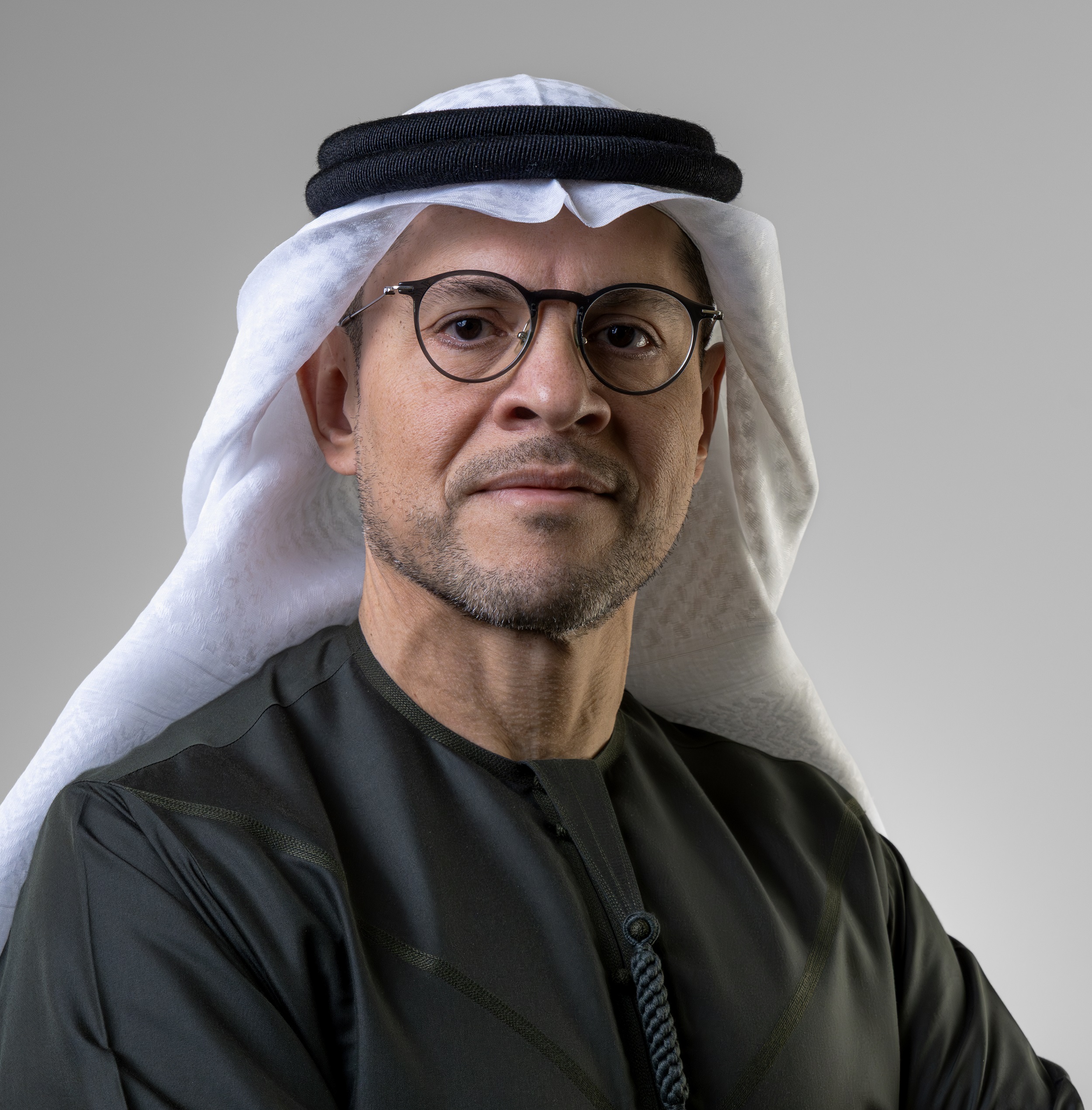
Mohamed Ali Al Shorafa
Chairman
Sessions (3)
Sessions featuring Mohamed Ali Al Shorafa at LIVEX | Main Stage
Opening keynote
His Excellency Mohamed Ali Shorafa opened the session with a clear value proposition: Abu Dhabi’s livability agenda is about making everyday life better while building the city into “the world's most livable and lovable destination.” He framed the question of what makes cities work as a shared challenge for people coming from different perspectives: how to make the places where people live better. In Abu Dhabi, he said, this question has deep roots in the legacy of the late Sheikh Zayed bin Sultan Al Nahyan, whose approach to development was meaningful because it improved people’s lives. The examples he gave were specific: agriculture, irrigation, tree planting, and the greening of the desert, which turned difficult land into places capable of sustaining life. Shorafa then connected that founding legacy to the current leadership of Sheikh Mohammed bin Zayed Al Nahyan and Sheikh Khalid bin Mohammed bin Zayed Al Nahyan. Abu Dhabi’s ambition, he explained, is not only about visible infrastructure but about the ordinary conditions that shape daily experience: easier journeys to work, strong schools and health care, parks and public spaces, and the ability for people to age while remaining independent and connected. He emphasized that livability also includes belonging: attachment to neighborhoods, familiar places, and memories. A city must continue to move forward, he argued, without losing the qualities that residents already love. The keynote moved next to delivery. Shorafa said Abu Dhabi wants to create the conditions for people and ideas to flourish, making the city a home for families, talent, entrepreneurs, and innovators. Achieving that requires coordination across government and partnership with the private sector. He stressed that residents do not experience government as separate departments; they experience Abu Dhabi as one place. For that reason, government leaders must share knowledge and data, plan together, and work with private partners to deliver the livability agenda. He linked this approach to what he described as one of the UAE’s strengths: being a young, agile, fast-moving nation able to achieve quickly and have impact beyond its size. In the closing section, Shorafa rejected the idea that livability and investment are separate priorities. When people enjoy living somewhere, he said, they put down roots; talent stays, businesses grow, and communities strengthen. Investment in infrastructure, services, and communities improves places, while better places create stronger economies. This relationship, he said, is one reason LIVX was created. Over the next three days, the aim is to learn from others, share Abu Dhabi’s experience, and identify opportunities to work together. He concluded that LIVX’s success will be measured not by stage remarks but by the partnerships, projects, ideas, and real improvements to people’s lives that follow.
“A truly livable city has to move forward without losing what people love about it.”
Two systems, one city
The core message of the session is that Abu Dhabi’s future city model depends on integrating hard infrastructure with digital infrastructure so government can improve livability, mobility, public services, and economic prosperity in one coordinated system. Moderator Mustafa Alrawi framed the discussion as “one Abu Dhabi, one city, two systems,” bringing together His Excellency Mohamed Ali Al Shorafa of the Department of Municipalities and Transport and His Excellency Ahmed Tamim Hisham Al Kuttab of the Department of Government Enablement. Al Shorafa emphasized that physical planning for roads, transport networks, communities, and long-term infrastructure cannot function effectively without data. He said data is essential for measuring livability, infrastructure needs, and networks, and for planning toward 2040 or 2050 in a city with more than 200 nationalities and many communities. Al Kuttab then broadened the discussion from technology to the purpose of government. He argued that Abu Dhabi is less focused on outputs and increasingly focused on impact: whether people who live, invest, or build businesses in Abu Dhabi can prosper and live happily. He explained the ambition announced a year earlier to become the world’s first AI-native government. In his definition, AI-native government is not simply about technology adoption; it is about giving people back time by automating government processes and even parts of the relationship between residents, citizens, and government. To enable that, Abu Dhabi is digitizing laws, policies, and regulations so AI can understand them. He cited a specific service improvement: government service satisfaction rose from 78% in 2022 to 93% after AI was implemented. The conversation then moved into how AI affects physical infrastructure and public servants. Al Shorafa described using live data from toll stations, cameras, and vehicles to simulate whether a new road, road expansion, or extra lane would reduce congestion or support new development. He stressed that AI provides insight, but human checks and balances remain necessary to validate the data and decisions. Al Kuttab added that Abu Dhabi’s AI model is not centrally imposed: every government entity plays a role, while DGE sets standards and provides infrastructure. He said 100% of Abu Dhabi government employees have been trained in artificial intelligence, and that future public servants will shift from processing high-volume transactions to handling judgment-heavy edge cases. The later portion of the provided transcript focused on innovation in transport and Abu Dhabi’s distinctive approach. Al Shorafa highlighted more than 530 autonomous vehicles operating in Abu Dhabi and described the emirate as a sandbox where companies can test new transport technologies and policies faster than in some countries. He also cited a cross-border autonomous cargo transport test between Abu Dhabi and a city outside the UAE, and a government decision that more than 25% of public transport would be sustainable vehicles. When asked whether Abu Dhabi was following cities such as Singapore, London, or New York, he rejected imitation as the goal, saying Abu Dhabi’s values guide its services, communities, and districts, and that the emirate aims to create a benchmark other cities and countries compare themselves against.
A letter to the cities we have not built yet
The closing message of LivX 2026 was that cities create lasting advantage by serving people well: the cities that treat their people best, and improve everyday experience, are the ones positioned to succeed in growth, talent, business, and investment. The host framed the final remarks by looking back across three days of discussions on movement, care, education, technology, and future planning, noting that Abu Dhabi is a particularly meaningful place for the conversation because many decisions about neighborhoods, priorities, and development are still being written and will be felt for generations. His Excellency Mohamed Ali Al Shorafa returned to the opening proposition of the event: “The cities that serve their people best will win everything.” He connected that idea to the “committed city,” saying it resonates strongly in Abu Dhabi because Sheikh Zayed was applying livability principles in Al Ain in the 1960s before livability became a global urban theme. Examples included protecting and expanding ancient felage irrigation systems, planting trees, creating green spaces, investing in roads, schools, and essential services, and planning communities around people’s needs. The lesson he drew was that quality of life is not a single project, but a long-term commitment to understanding people, investing for the future, and continuously improving the places where they live. The speech then moved from principle to implementation. Al Shorafa said the week had shown commitment translated into action through partnerships across real estate, mobility, technology, and community services, bringing government and the private sector together around Abu Dhabi’s continued development. He argued that there is no longer a choice between growth and quality of life; the real challenge is delivering both. He summarized the shift in urban success as moving from what a city builds to what people experience. Infrastructure, transport, housing, public spaces, and reliable services still matter, but cities also need to ask whether journeys became easier, services more accessible, and everyday life better. To answer those questions, he pointed to data, artificial intelligence, and digital systems as tools that can give cities a richer understanding of lived experience, while stressing that improving people’s lives must remain the purpose. He cautioned that no three-day discussion, government, company, institution, or city has all the answers, so progress depends on continued engagement among governments, the private sector, academia, and experts. LivX, he said, is intended to become more than a three-day event: an ongoing global platform for livability and investment conversations. The event closed with an invitation to return to Abu Dhabi in October 2027 for the next edition, and with hosts thanking speakers, moderators, partners, exhibitors, and the audience for contributing to the inaugural LivX 2026.
“The cities that serve their people best will win everything else.”